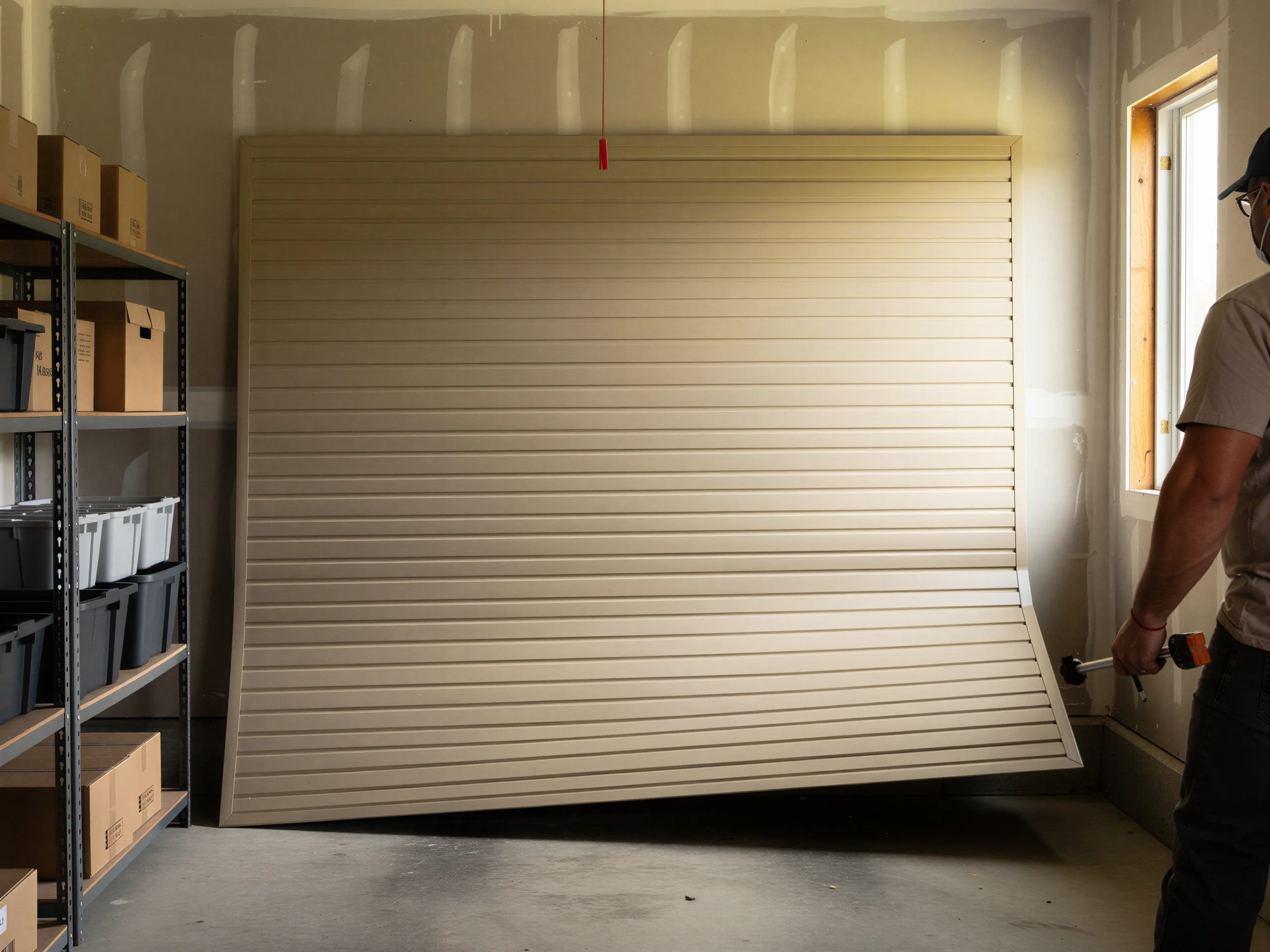
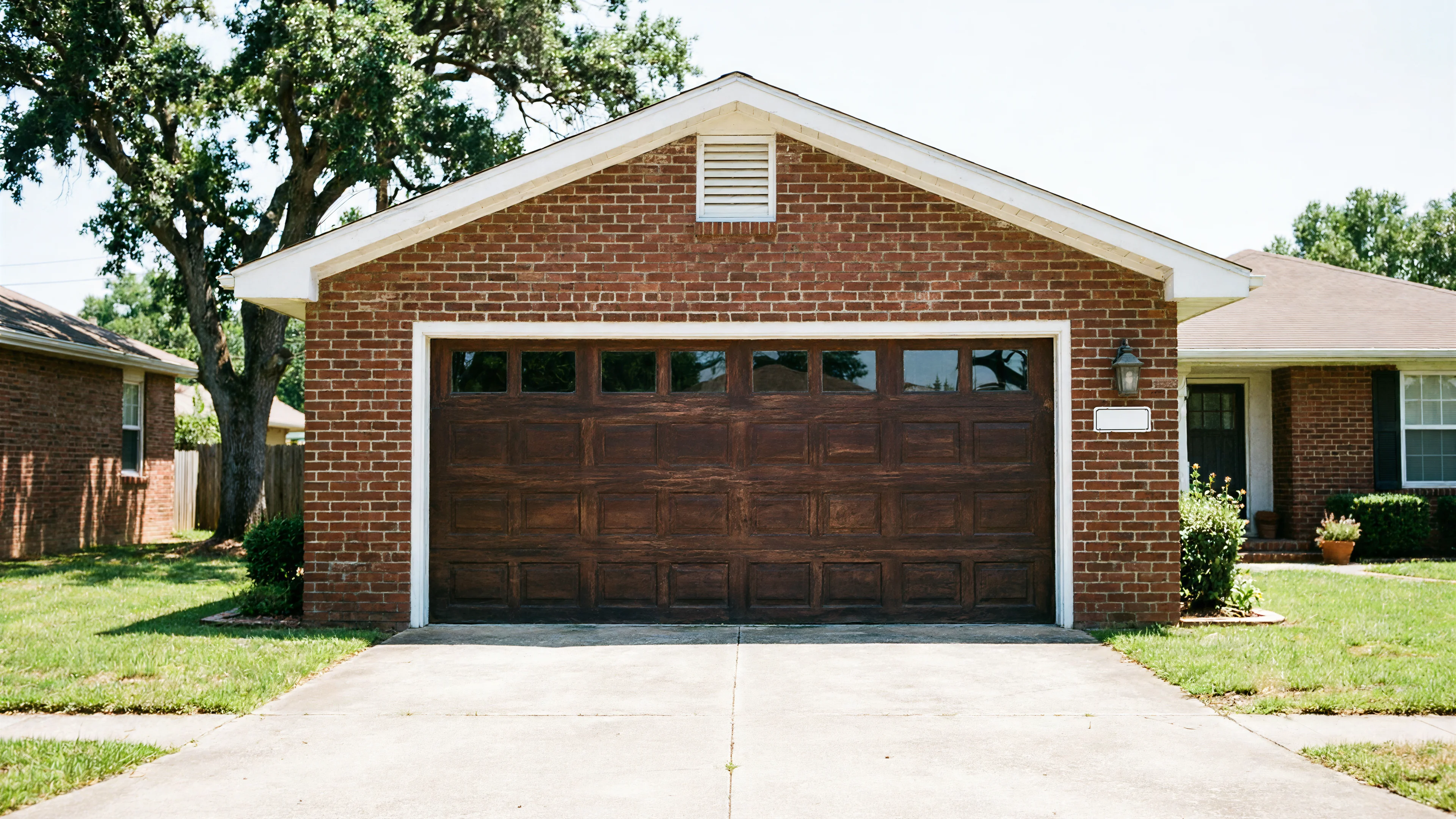
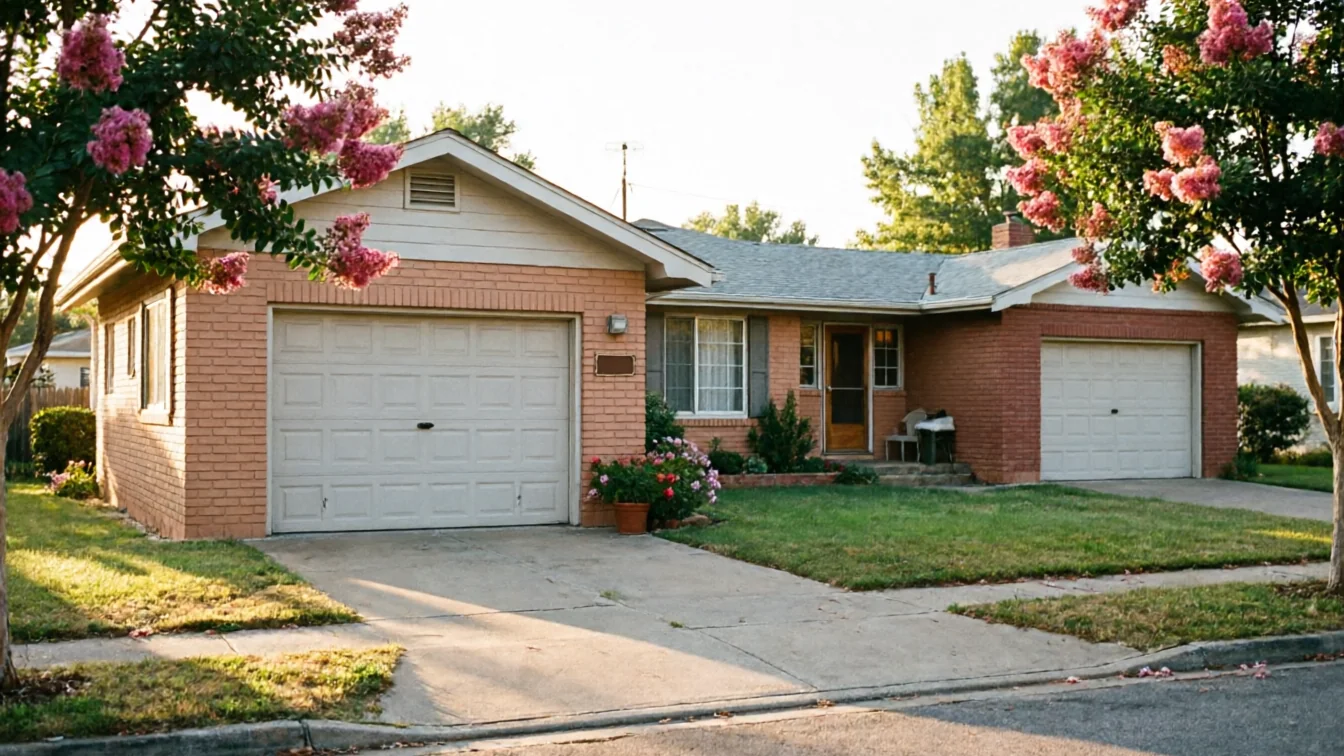
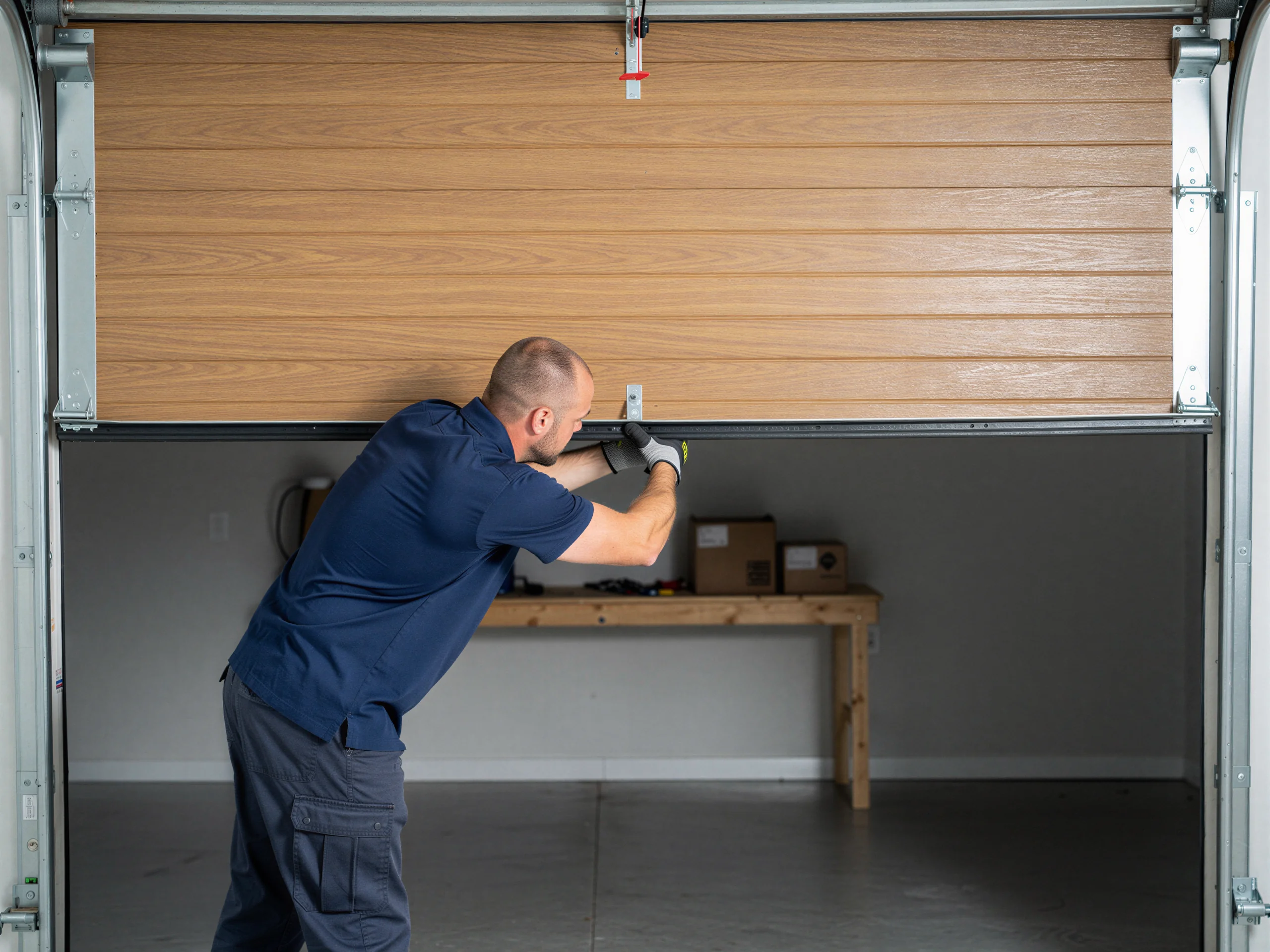
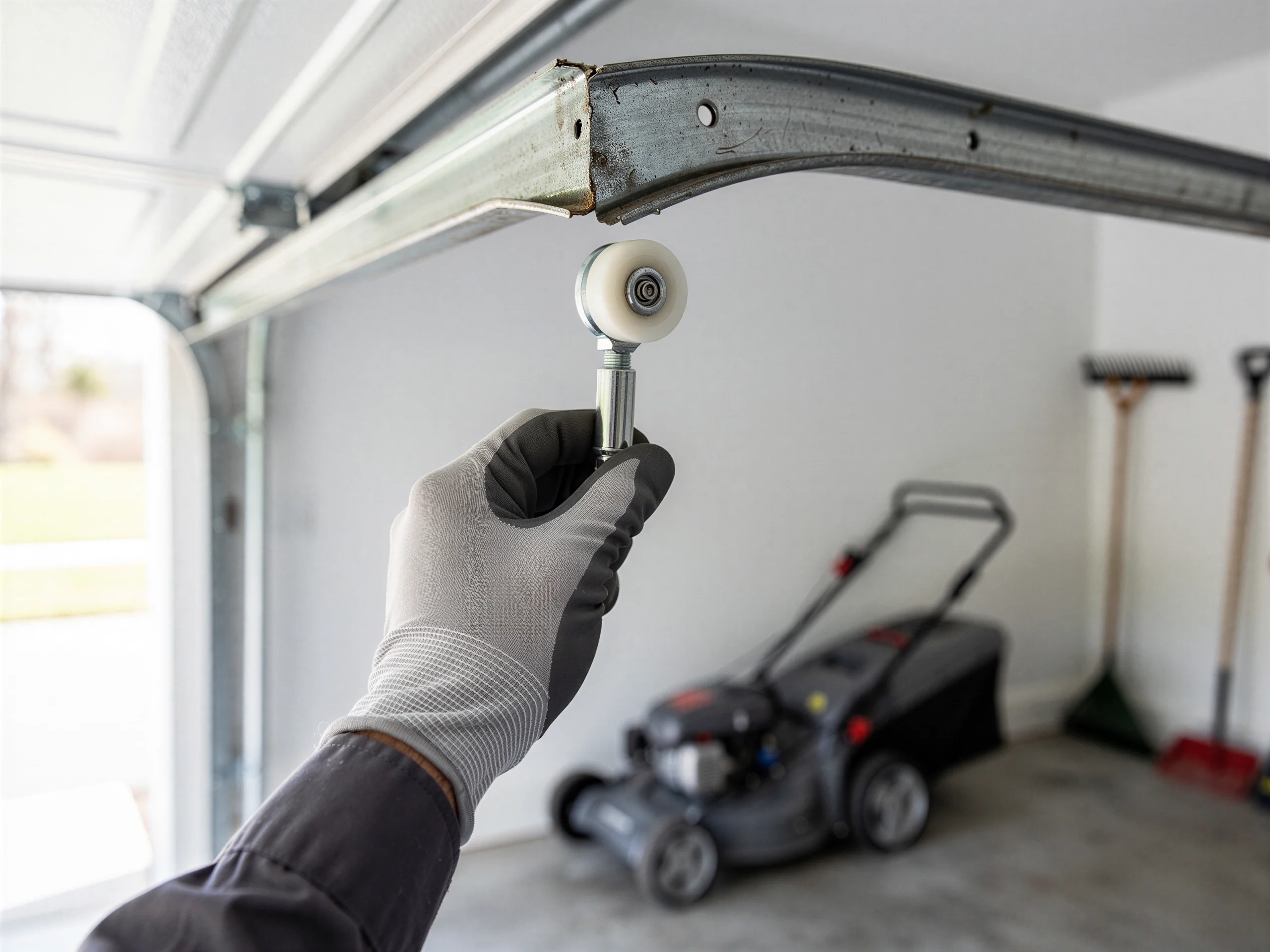
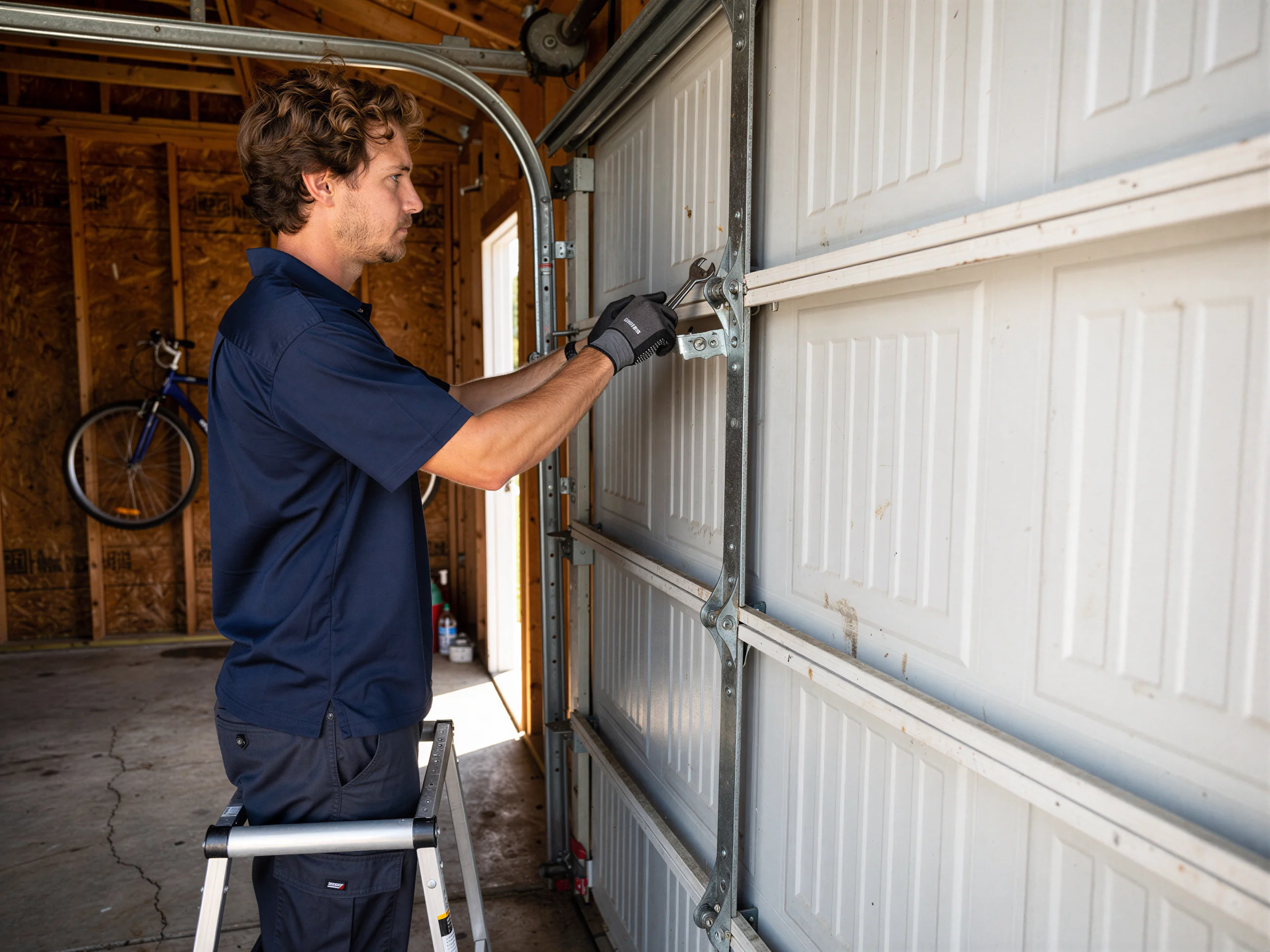
Housing across this service area mostly went up between 1953 and 2014, with the bulk of it dating to the 1980s and 90s. That matters for this specific fault: a lot of these garages still carry their original steel track, sized and gauged for the lighter single-layer doors builders hung at the time. Swap in a heavier insulated door later - a common upgrade - and the original track brackets start taking more load than they were ever set for. Over enough years, the brackets walk loose from the jamb a sixteenth of an inch at a time, and eventually a roller pops clean out of the rail.
Climate plays a role too. This area sits in a moderate heat band, which means the track and its mounting hardware go through a real expansion-and-contraction cycle every summer, not the deep freeze-thaw you'd get farther north, but enough repeated movement over a few decades to loosen lag screws and widen the gap between track and wall.
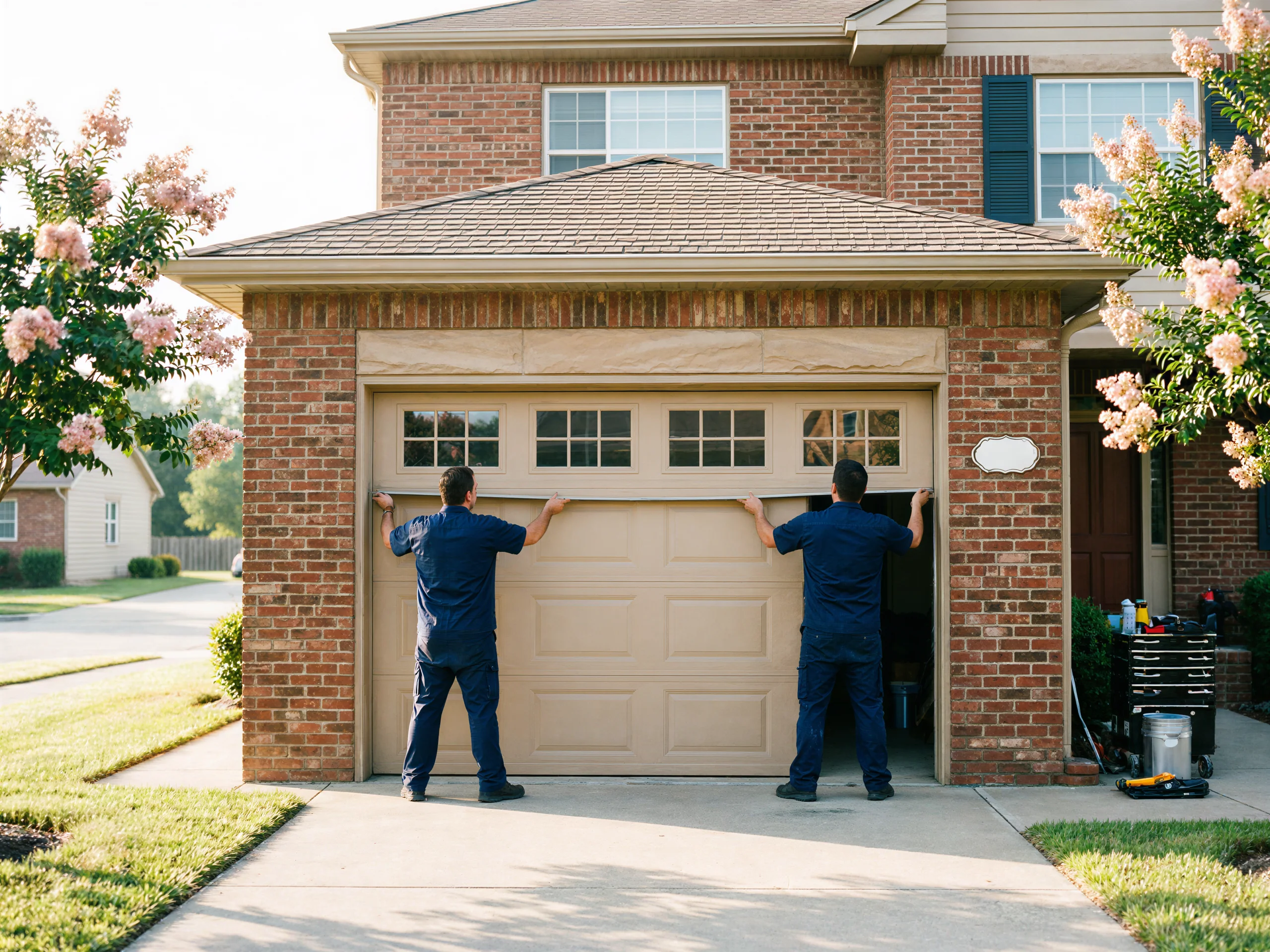
We see this across the whole area we cover, not just one neighborhood - from homes a few miles out to the ones closer to twenty, the pattern holds wherever the original track is still doing the job.