
Sixty years of fatigue
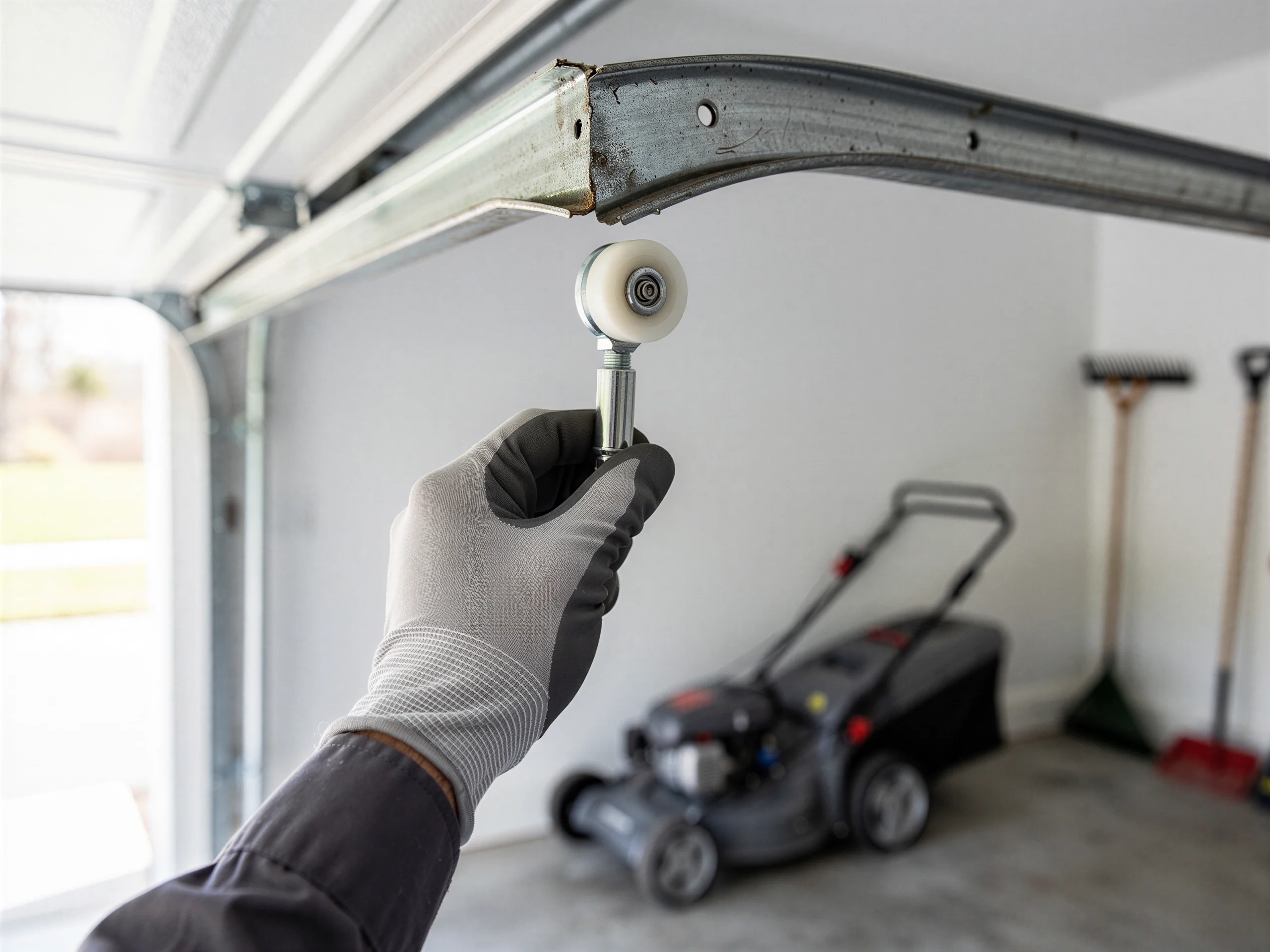
Over sixty years those springs fatigue, the tracks warp slightly from heat cycling, and the original rollers - steel, not nylon - wear grooves into the track that make the door shudder on the way up.
Richland Hills, North Richland Hills
Richland Hills homes mostly date to 1959, meaning older steel sectional doors and torsion hardware. We travel the 4 miles from North Richland Hills to fix them.
Symptoms
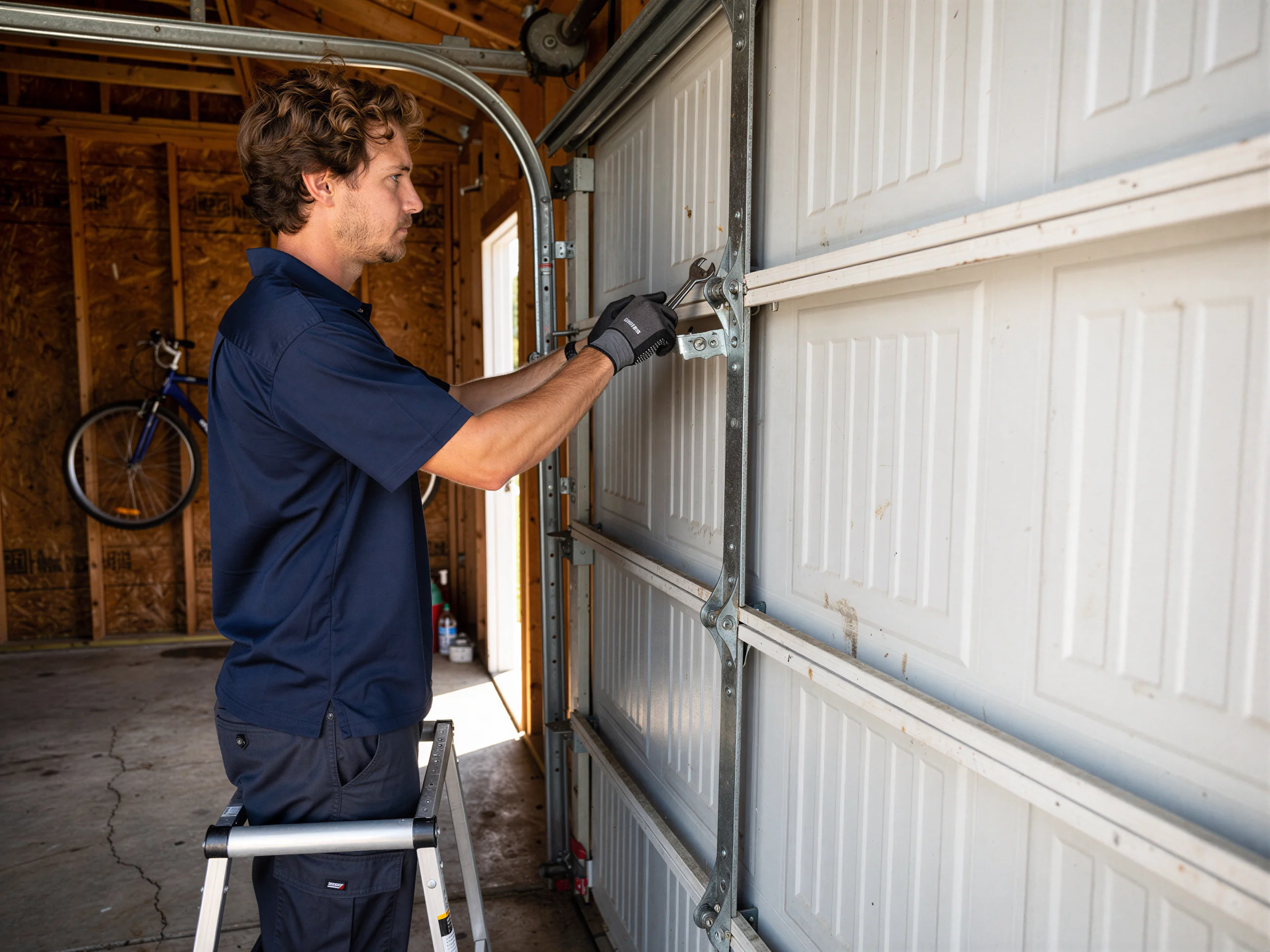
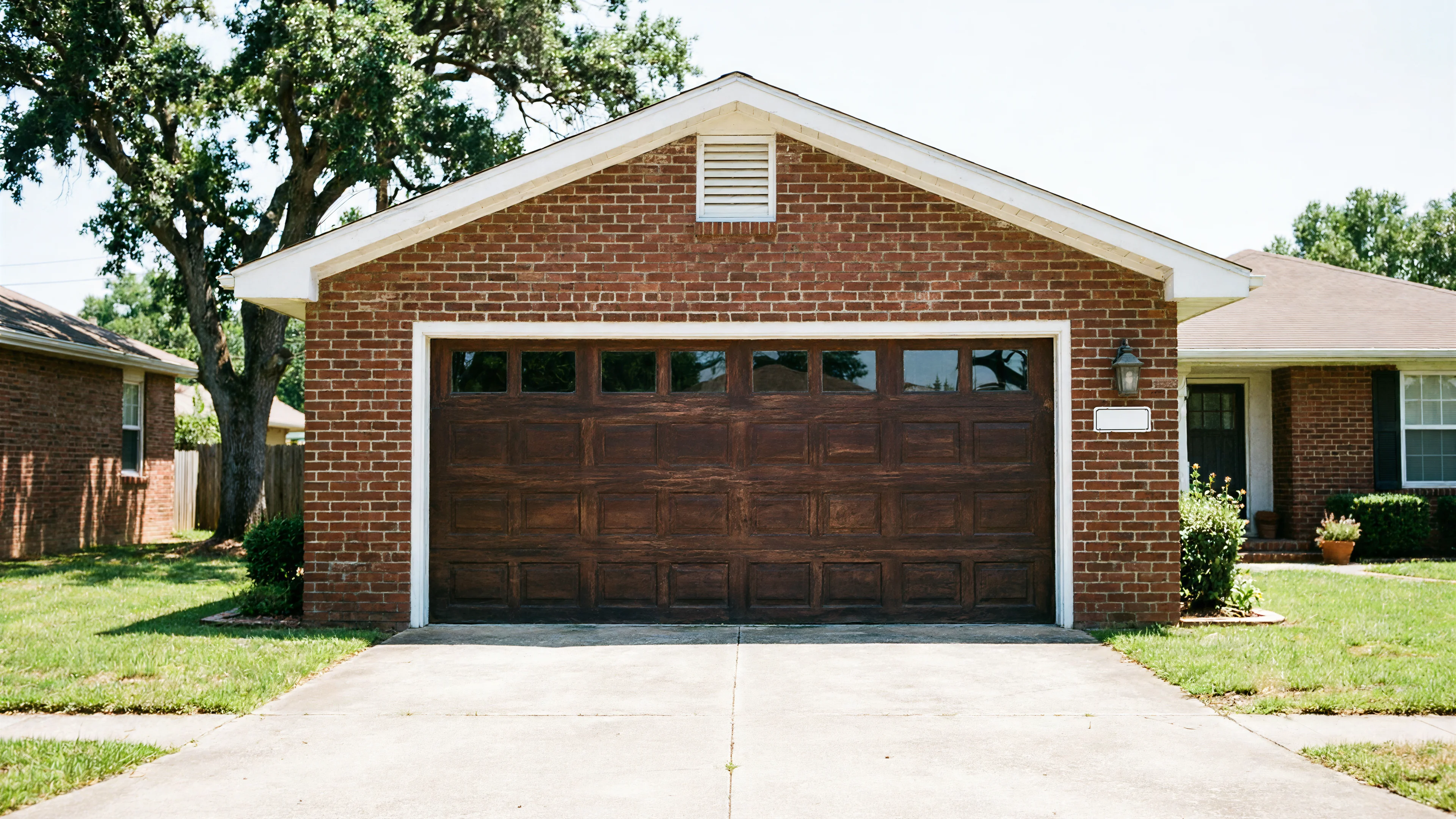
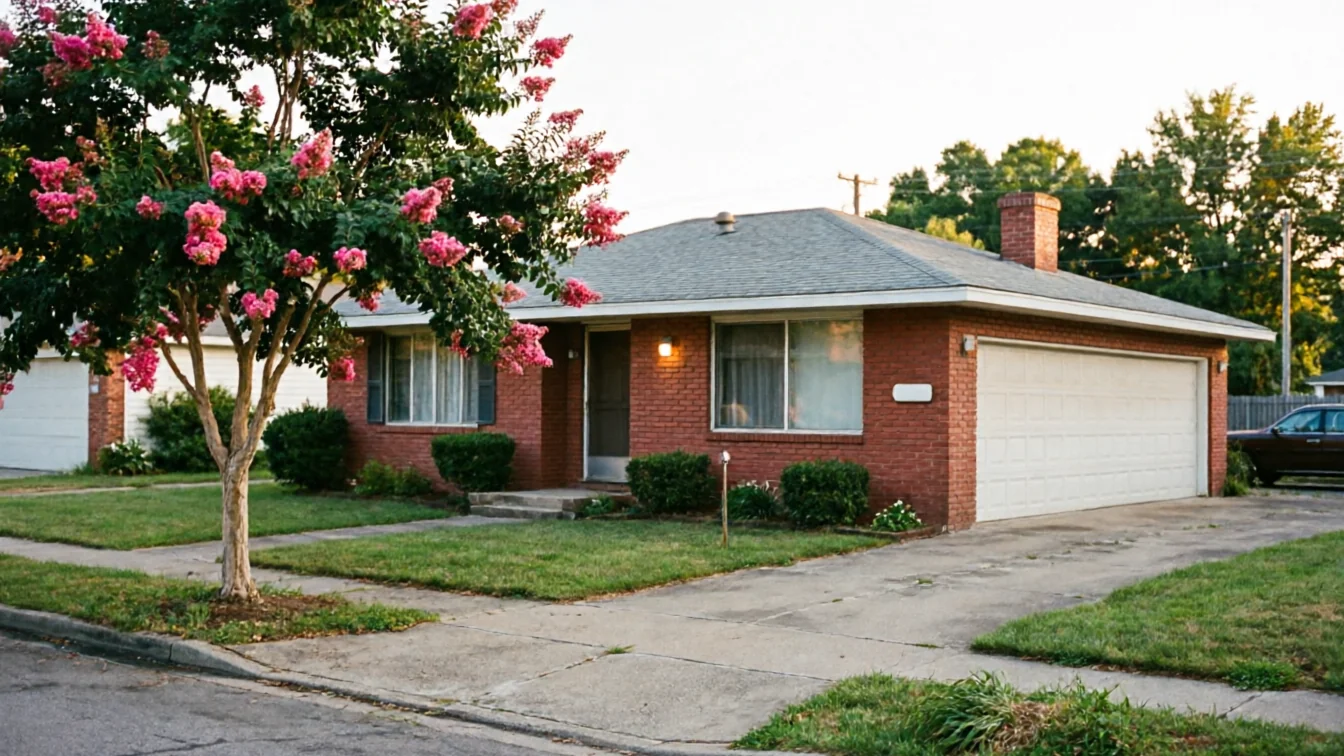
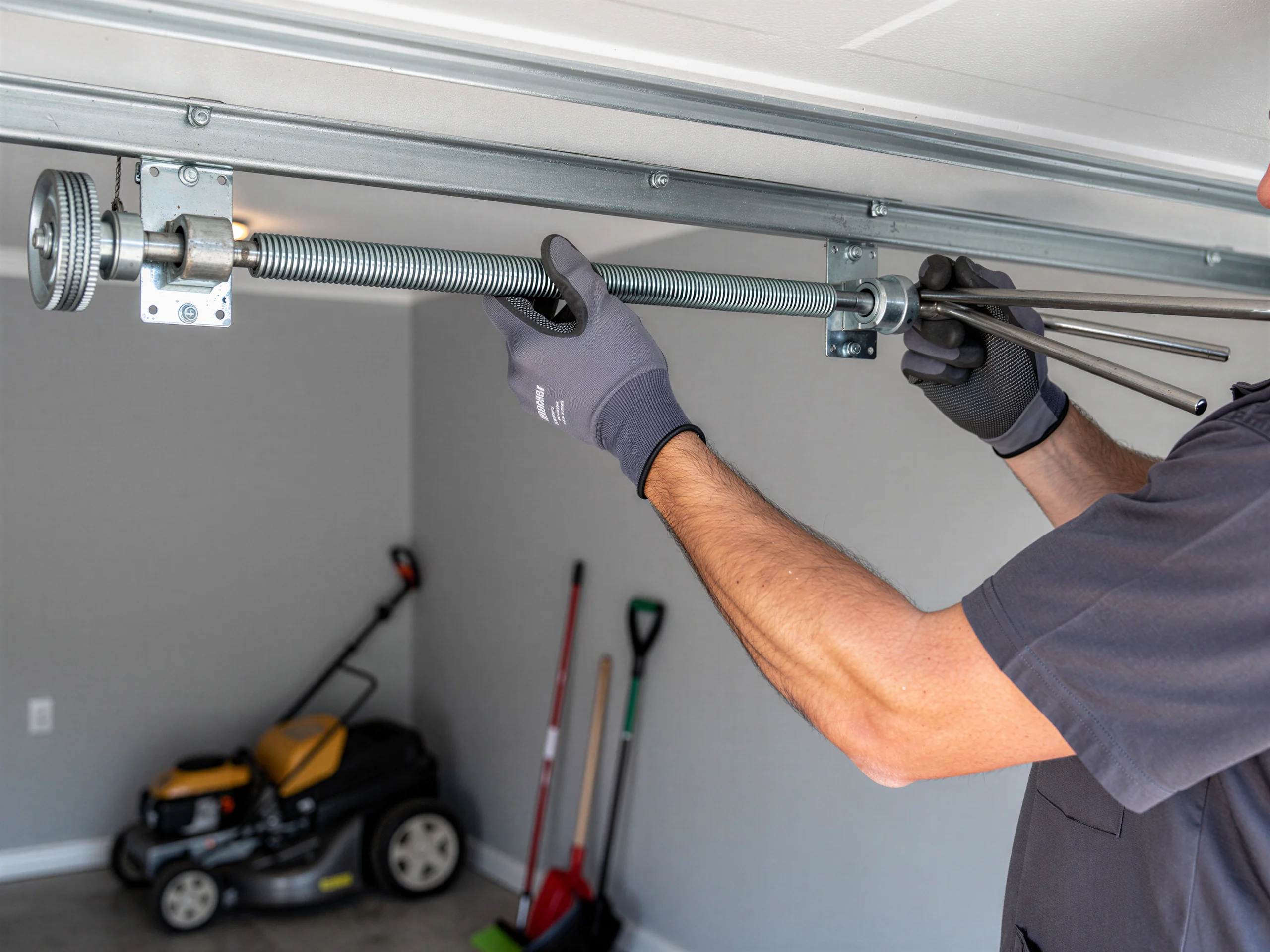
Most houses in Richland Hills went up around 1959, and the garage doors that came with them were plain steel sectional panels, single-layer, no foam core, hung on a torsion spring sized for a lighter door than what's often been bolted on since.
Over sixty years those springs fatigue, the tracks warp slightly from heat cycling, and the original rollers - steel, not nylon - wear grooves into the track that make the door shudder on the way up.
If your door bangs on the second foot of travel or won't budge until you shove the opener's manual release, that's the classic sign of a spring that's lost tension, not a opener problem.
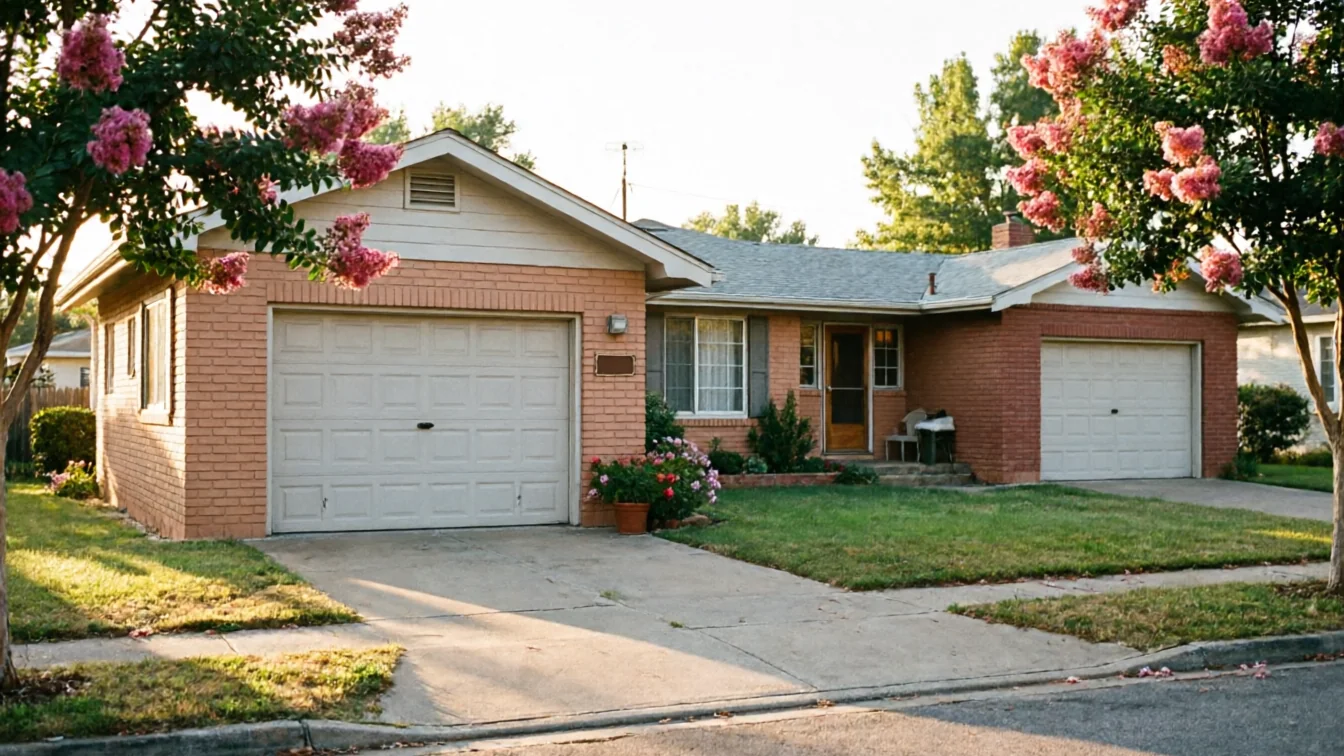
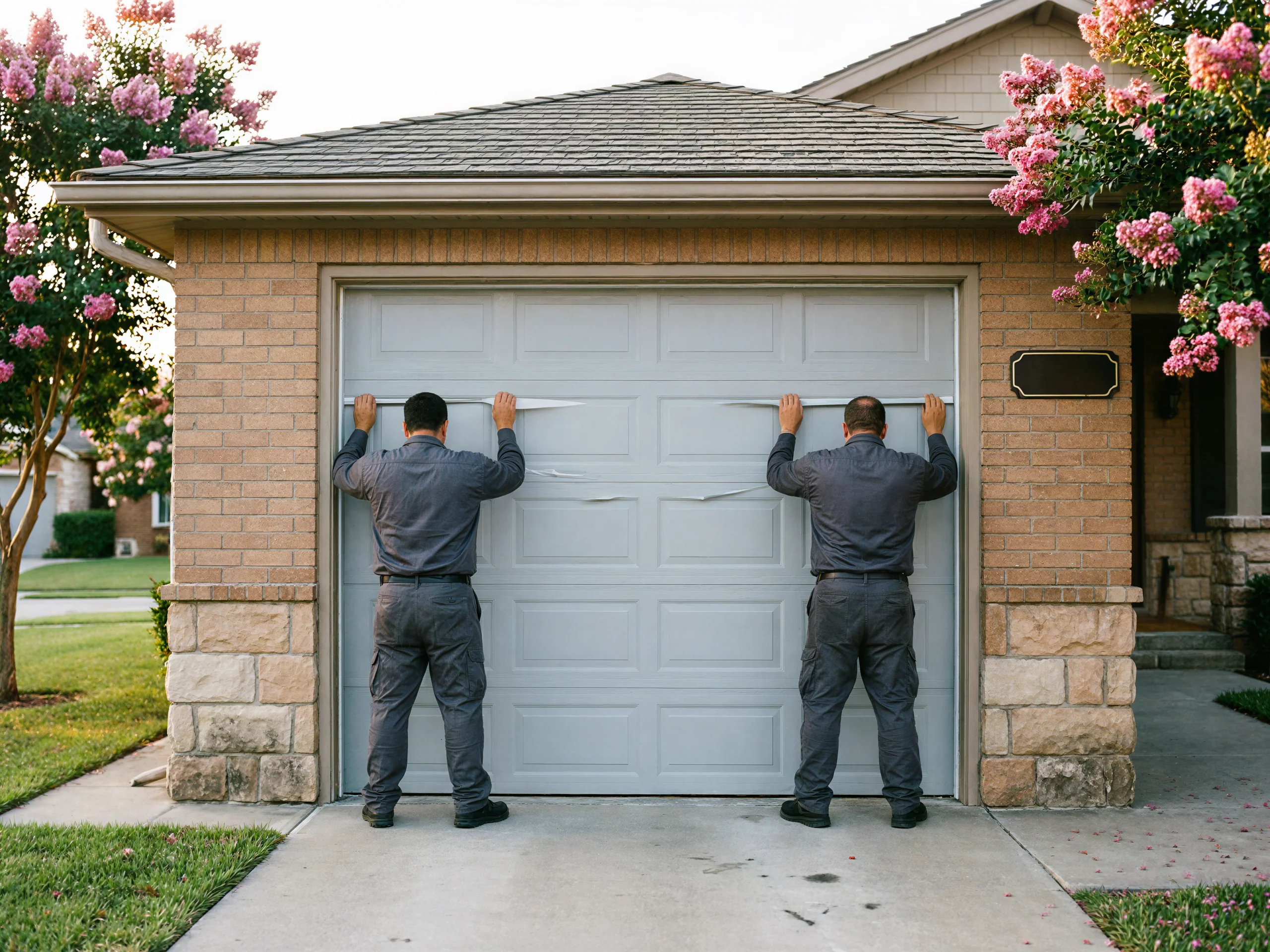
On some of these houses the single-car bay was framed small by today's standards, which matters when a panel needs replacing - a current stock size may not drop into a 1959 rough opening without trim work. We see this shape of complaint often enough in this part of the service area that it's worth describing plainly rather than lumping it in with newer-build symptoms.
Our process
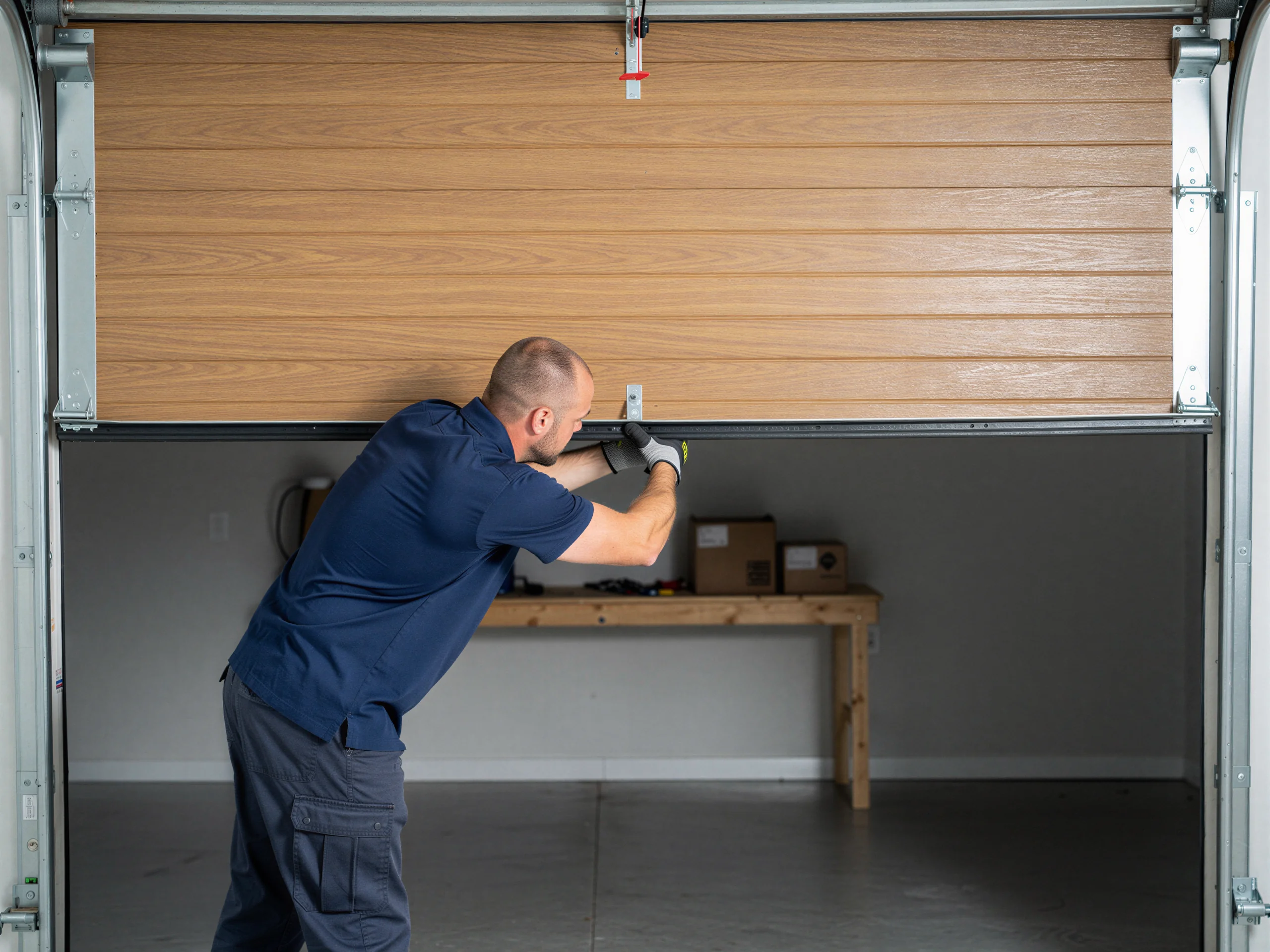
On a door this old we check the spring wire gauge and drum size before we order anything, because a mismatched replacement spring either won't lift the door or will overdrive it. Torsion hardware from 1959 is usually a single spring on a stationary cone - we convert to a properly matched spring and confirm the cable drums aren't the original worn ones before we close the job out. Track alignment gets checked with a level, not by eye, since six decades of foundation settling can throw a track out by more than it looks. If rollers are the steel original type, we swap them for sealed nylon rollers while the door is already open, since that's a small add-on next to the labor already being spent. We don't guess at spring size from the door's weight alone - we measure the coil and the wire.
DIY or pro
Lowering a garage door with a wound torsion spring is not a project to do solo, and that's the honest limit here - we won't walk someone through it over the phone. You can safely check a few things yourself: listen for grinding versus a dull thump (grinding is usually rollers, a thump is often the spring), and look at the cables for fraying near the bottom bracket. If a cable's visibly frayed, don't run the opener again - that's a sudden-drop risk. Past that, on a door built in 1959 we'd rather see it in person before anyone touches the spring.
Booking
We run out of North Richland Hills, and Richland Hills sits about 4 miles off, so getting a truck to a job here doesn't mean a long wait for the drive itself.
When you call, tell us the door's rough age - 1959-era stock is common enough here that knowing that up front lets us bring the right spring size and the right roller stock instead of guessing on-site.
Richland Hills has roughly 3,156 households, smaller than some of the surrounding areas we cover, and a median income of $67,628, which we mention because it shapes a real decision point: on an older single-layer door, a repair that patches one failing panel is often the right call here rather than a full replacement, and we'll say so plainly if that's what the door needs.
Downtime
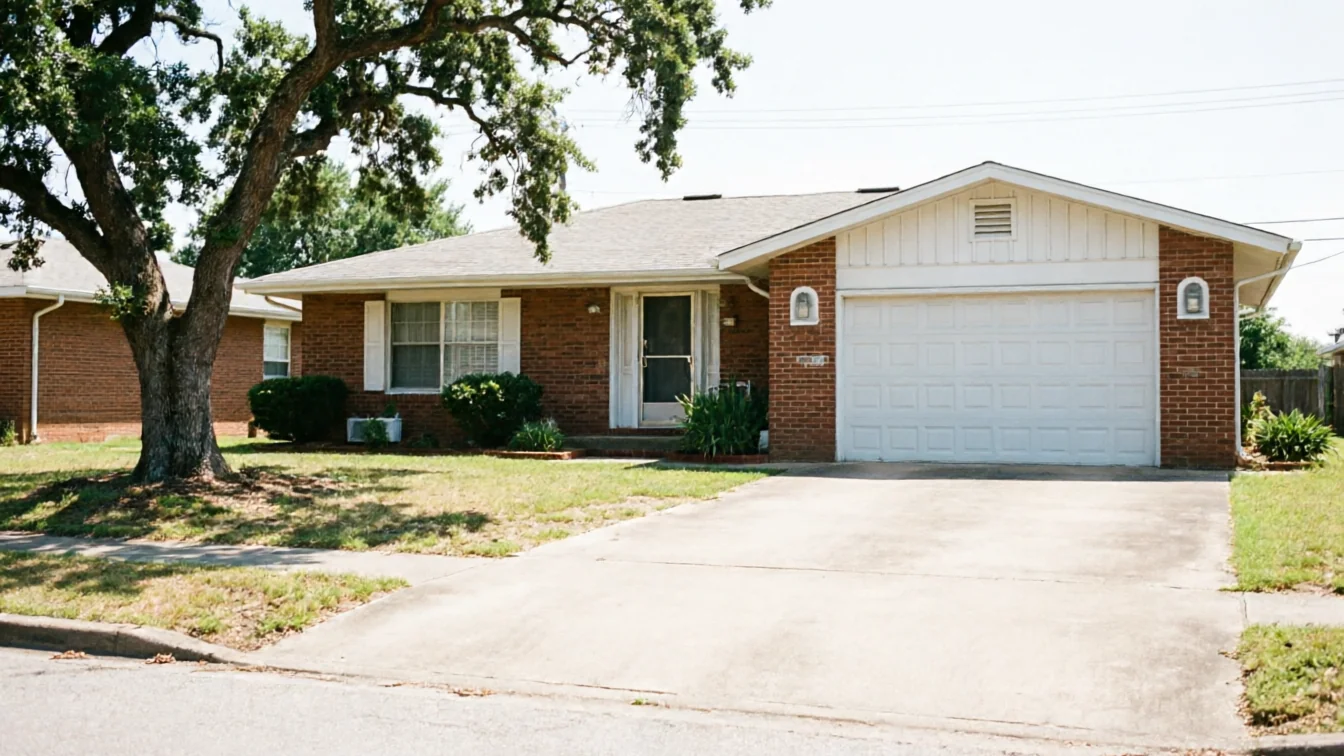
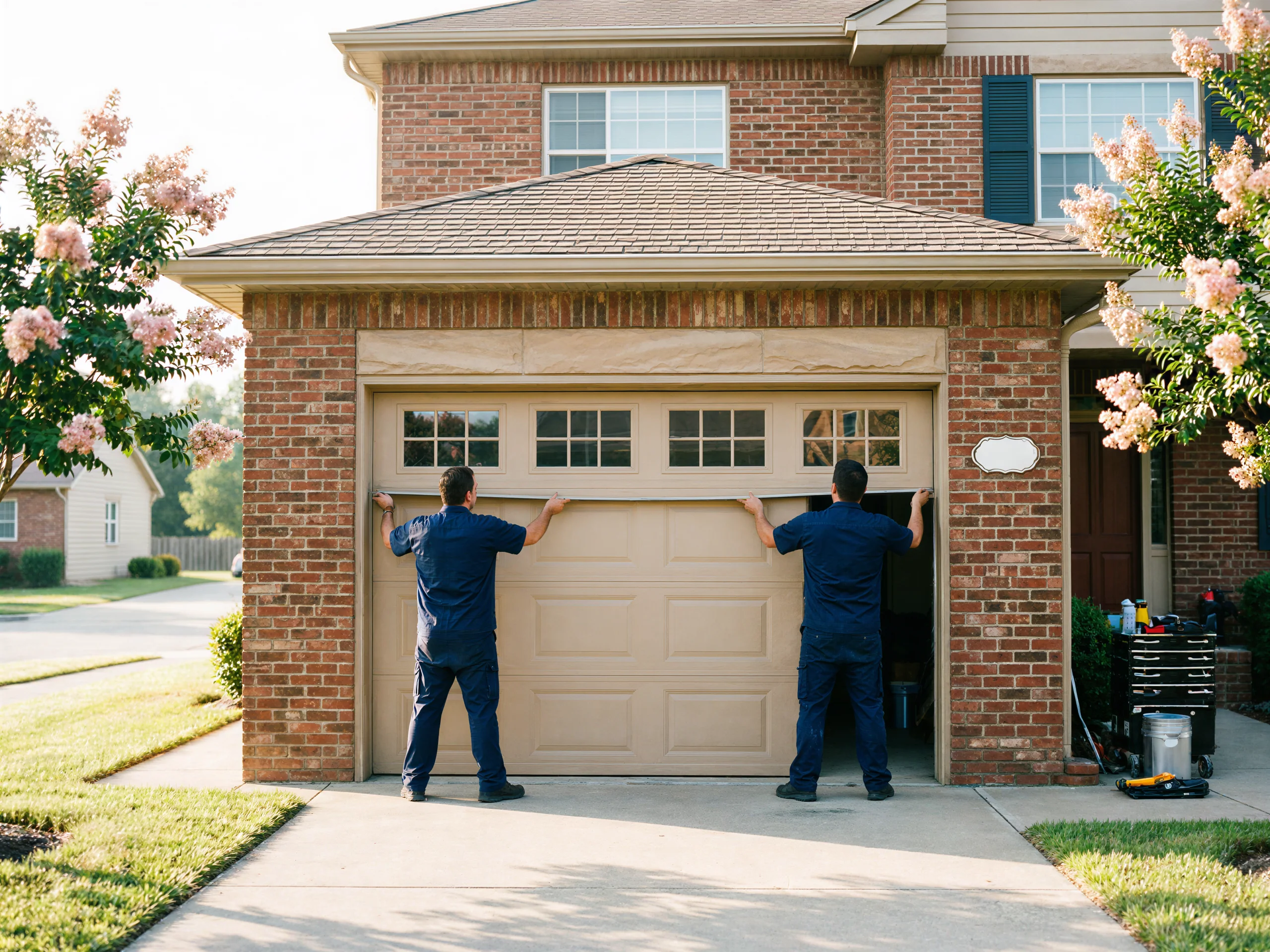
A straightforward torsion spring swap on a 1959-era single door usually doesn't keep the garage closed up overnight - once we're on site with the right spring, it's an hour or so of work. Where it runs longer is track replacement on a door that's been limping along with a bent rail, since straightening isn't reliable on steel that's been bent for years and we'd rather replace the section than send you back out with a half-fix. Panel damage is the wildcard: if the original panel size isn't something we carry on the truck, that piece has to be ordered, and you're looking at days, not hours, with the door secured in the meantime rather than left open.
On the truck
Given how many Richland Hills calls turn out to be older torsion hardware, the truck carries a spread of spring sizes rather than just the one or two sizes that'd cover a newer subdivision. We stock sealed nylon rollers to swap out tired steel ones on the spot, standard lengths of track, and the cable and drum hardware that tends to wear out alongside a failing spring on a door this age. What we don't carry is custom panel stock sized to a 1959 rough opening - if a full panel's gone, that part gets ordered after we've measured the actual opening, not before.
Questions
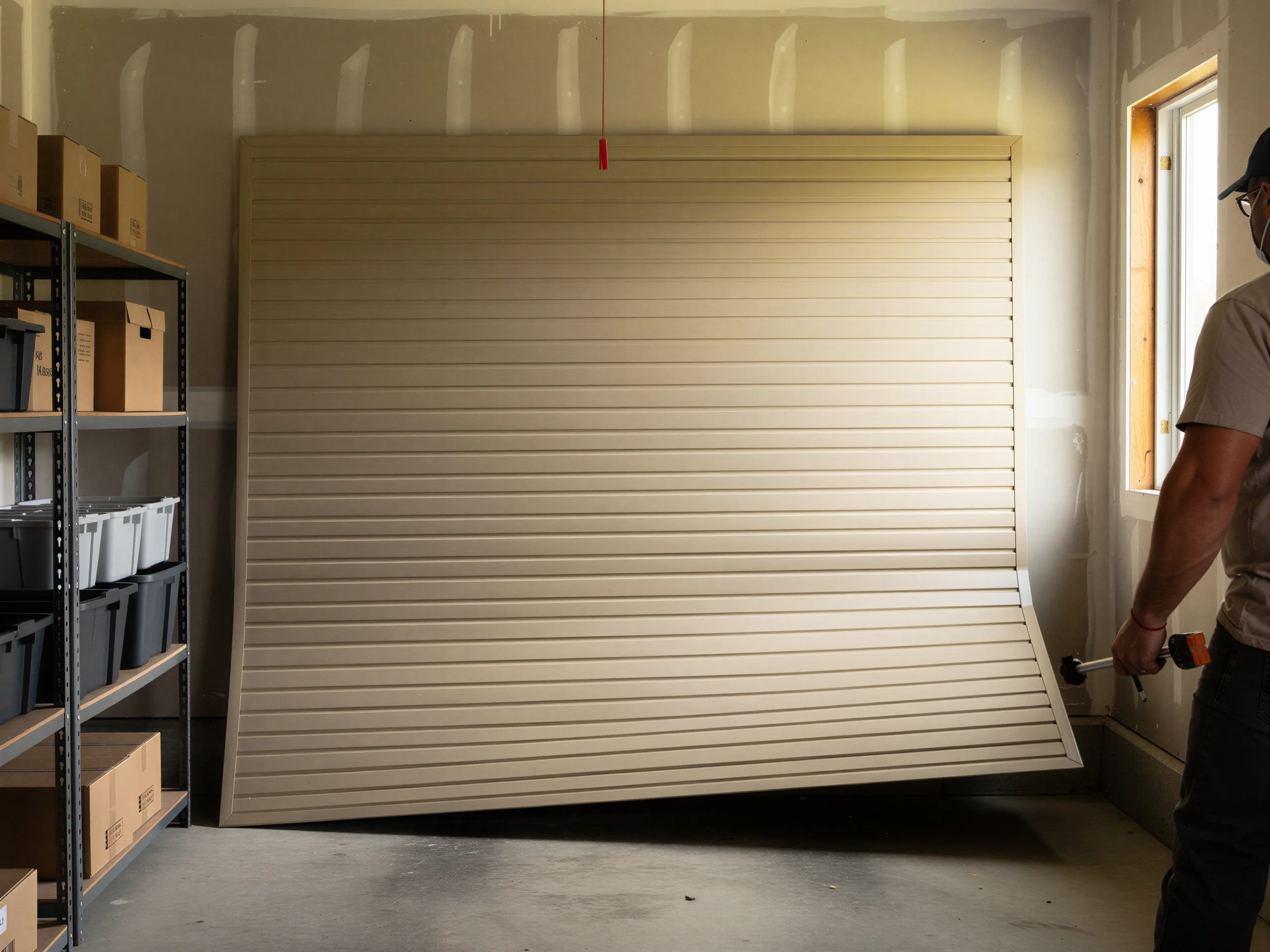
On a lot of Richland Hills' 1959-era doors, that's the torsion spring losing tension unevenly, combined with steel rollers that have worn a groove into the track. The door catches at that spot every time. We check both the spring and the roller wear together, since fixing one without the other usually brings the call back.
Not always without trim work. Houses built around 1959 sometimes have a rough opening sized smaller than today's standard door stock, especially on single-car bays. We measure the actual opening before ordering anything rather than assuming a current size will drop straight in.
About 4 miles from North Richland Hills, where we're based. We don't keep a separate branch in Richland Hills, but the distance is short enough that it doesn't change how a job gets scheduled.
Depends on the door. On an older single-layer steel door with one bad panel, patching that panel is often the more sensible spend than a full replacement. We'll tell you straight if the door's condition means repair isn't worth it anymore.
Explore more
Ready when you are
North Richland Hills Garage Door Co repairs and installs garage doors, springs and openers in North Richland Hills, TX and the surrounding area.