
Door stays in service
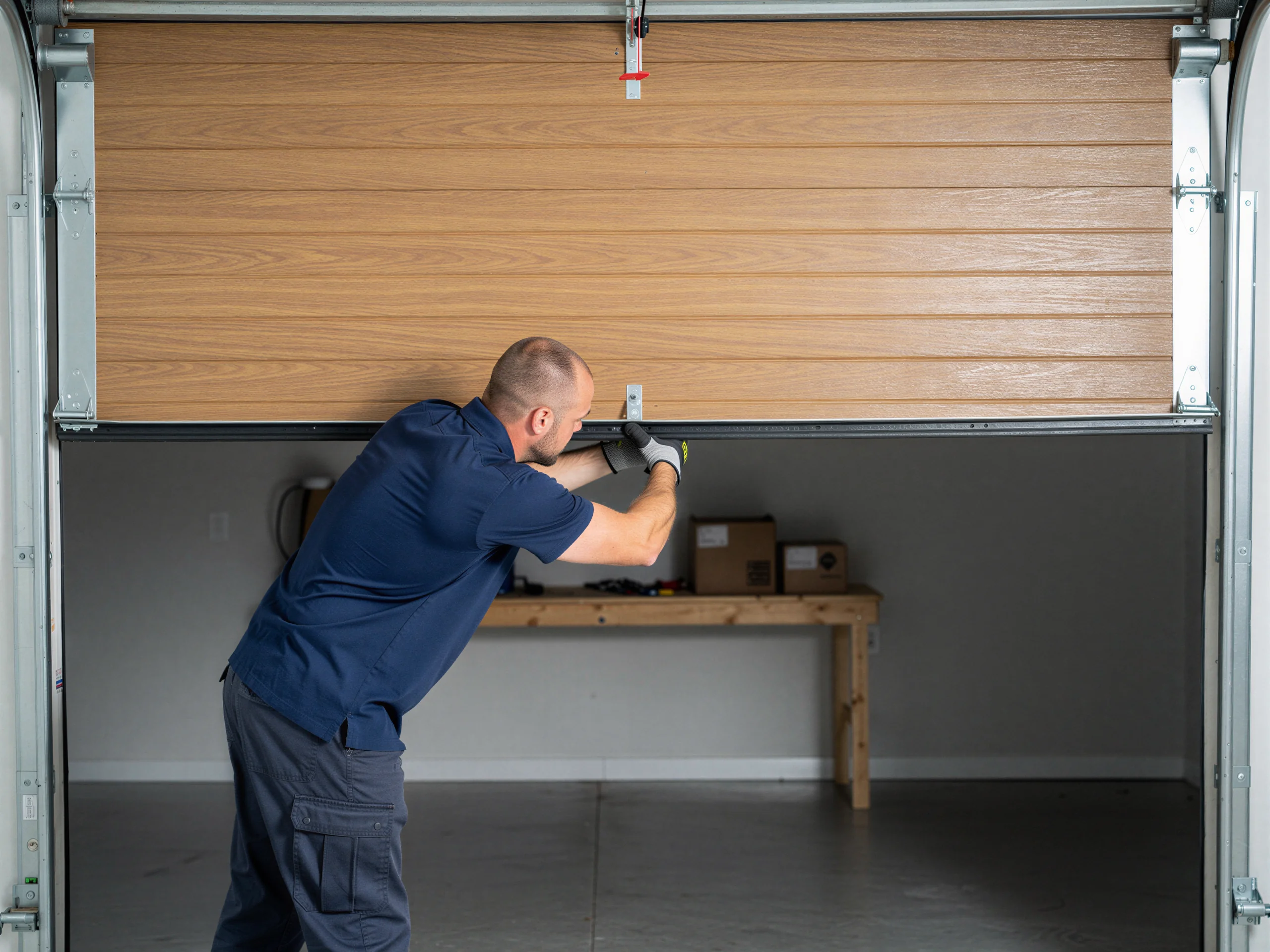
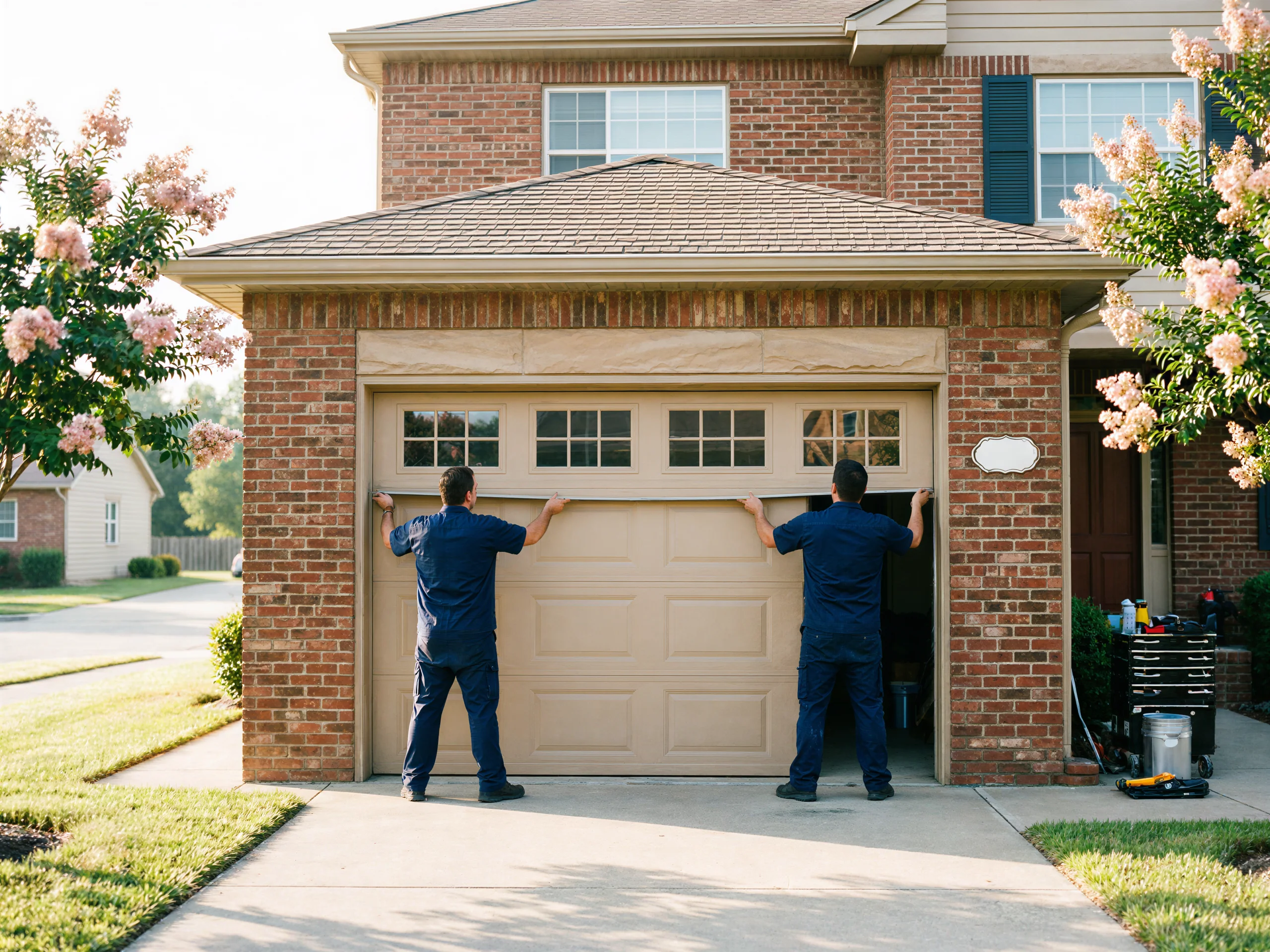
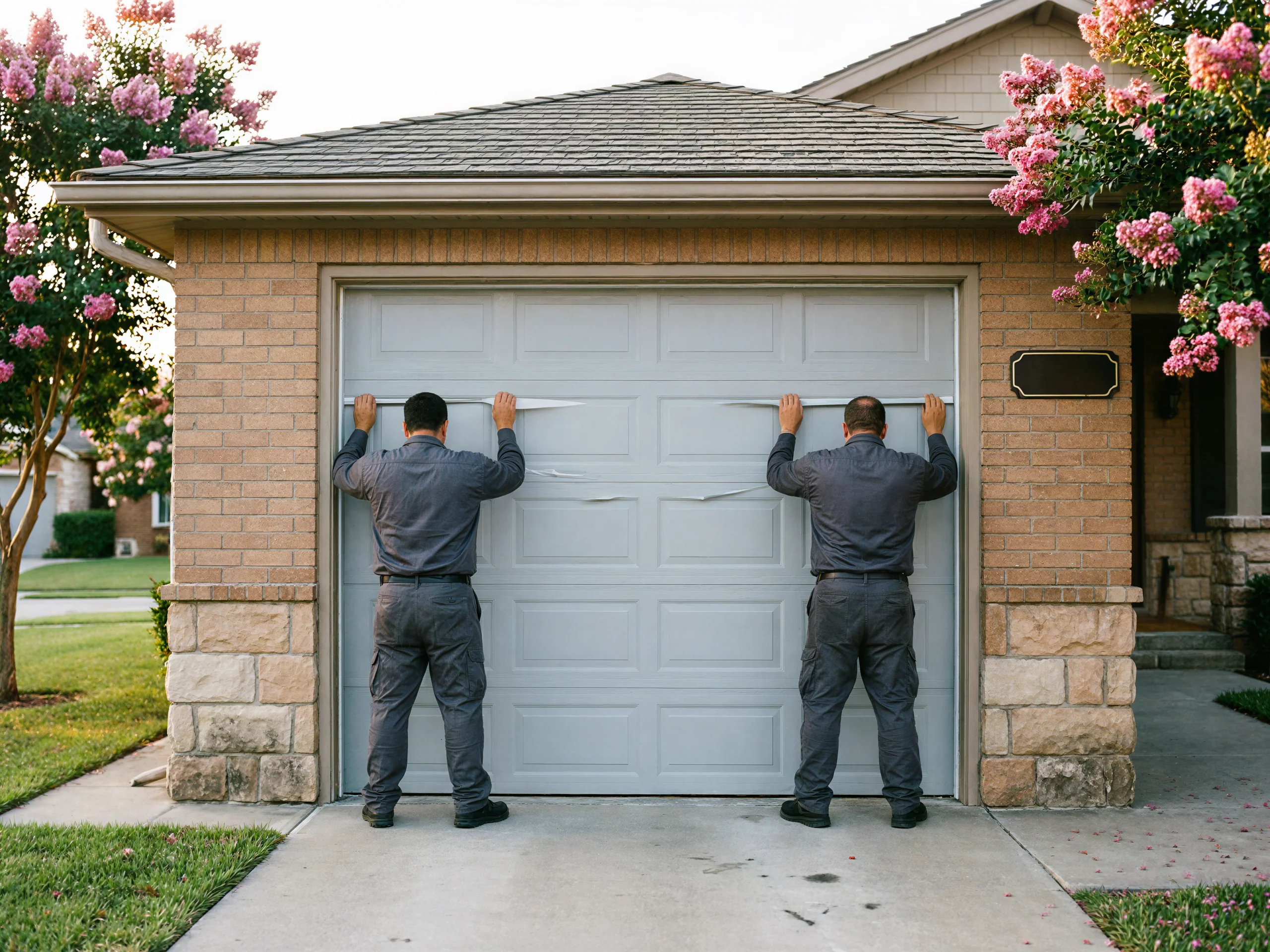
On a scheduled tune-up, the door stays in service the whole time - we work the opener, springs, and track while the car stays parked outside if needed, and you're not locked out of the garage.
Trophy Club, North Richland Hills
Garage door maintenance for Trophy Club homes built since 2000, serviced from North Richland Hills, 10 miles away. Tune-ups that catch wear before it fails.
Downtime
Trophy Club runs about 4,784 households, a small slice of the 105,295 spread across the wider North Richland Hills service area. That size matters for how a maintenance route works here: there's no local depot, so every visit comes from North Richland Hills, roughly 10 miles out.
On a scheduled tune-up, the door stays in service the whole time - we work the opener, springs, and track while the car stays parked outside if needed, and you're not locked out of the garage.
A maintenance call isn't an emergency repair, so there's no rush to get the door moving again; it's already moving. The only downtime is the 30 to 45 minutes we're on site, not a day waiting on a part.
Because the town is smaller, we're not rotating through a dozen Trophy Club jobs on the same morning the way we might in a denser part of the service area, so the appointment window tends to be a specific time rather than a loose block.
On the truck
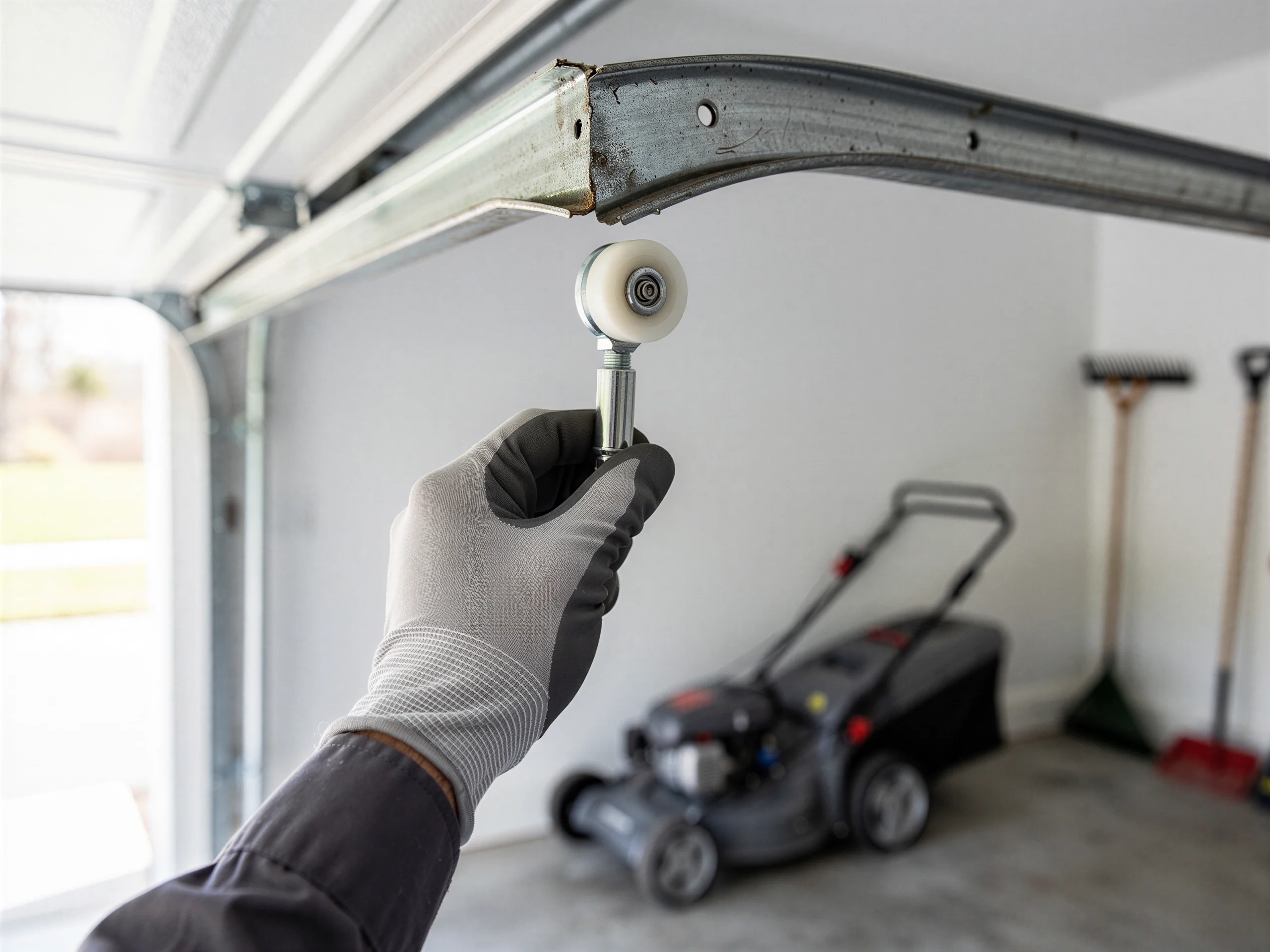
For a standard maintenance visit the truck carries lubricant rated for the hardware (not the all-purpose grease that gums up in summer heat), replacement rollers, lift cables, and the small fasteners that back out on torsion systems over years of cycling.
Given that this area's homes mostly date to around 2000, we're usually working newer opener models and steel doors, not the original one-piece wood doors you'd find on 1960s stock elsewhere in the service area. That means standard parts fit more often than not.
Where we fall short: if your opener is a less common model or the track has a non-standard mounting bracket, that part isn't something we carry stocked on the truck, and we'd need to order it and come back. We'll tell you that on the spot rather than improvise with a part that doesn't fit the hardware.
A maintenance visit is built around catching wear before it becomes a failure - it is not the visit where we replace a full torsion spring system, though we'll flag it if one's close to the end of its cycle life.
Our process
The visit starts with a cycle test - opening and closing the door a few times to listen for grinding, catch points, or uneven travel.
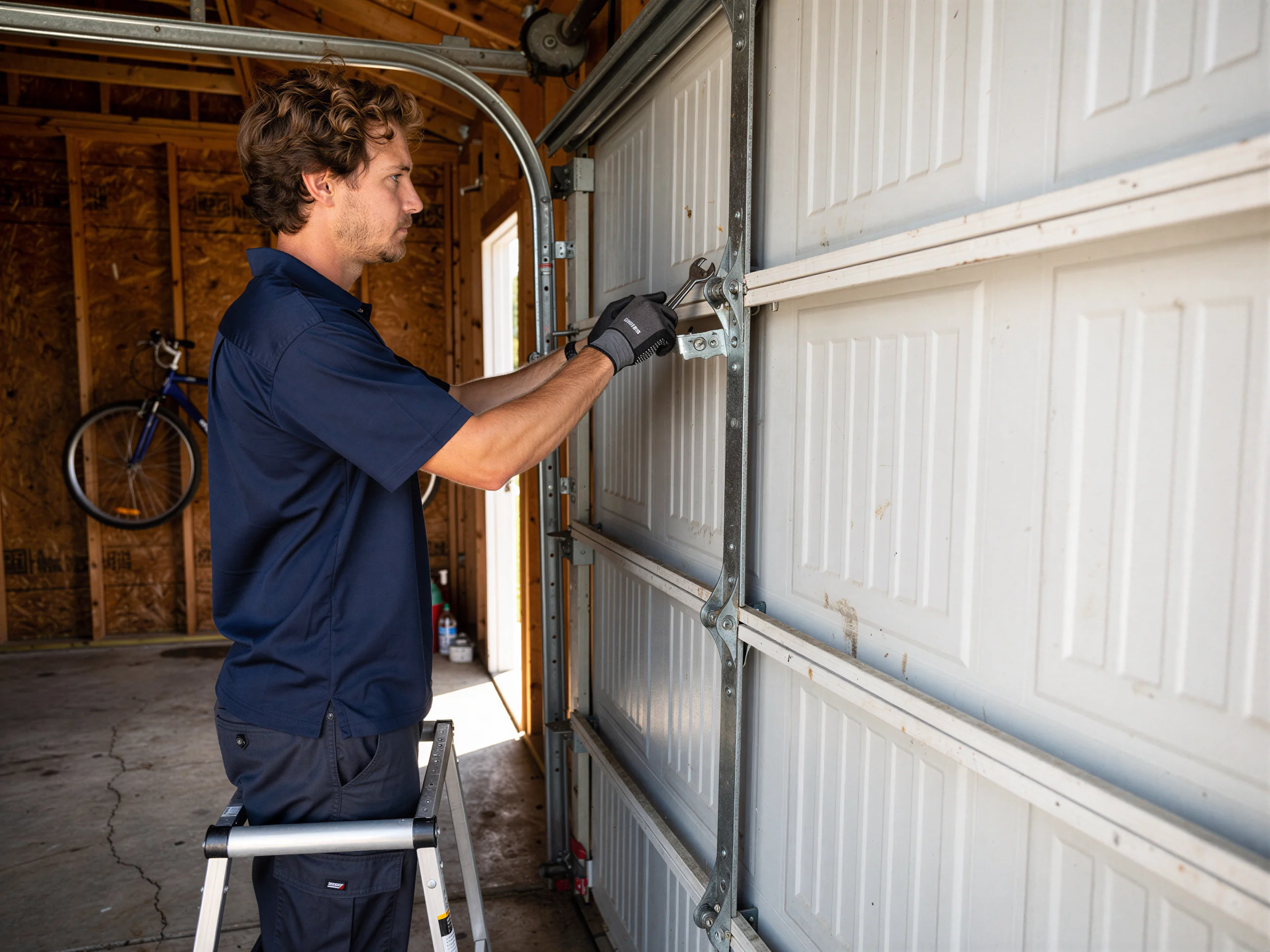
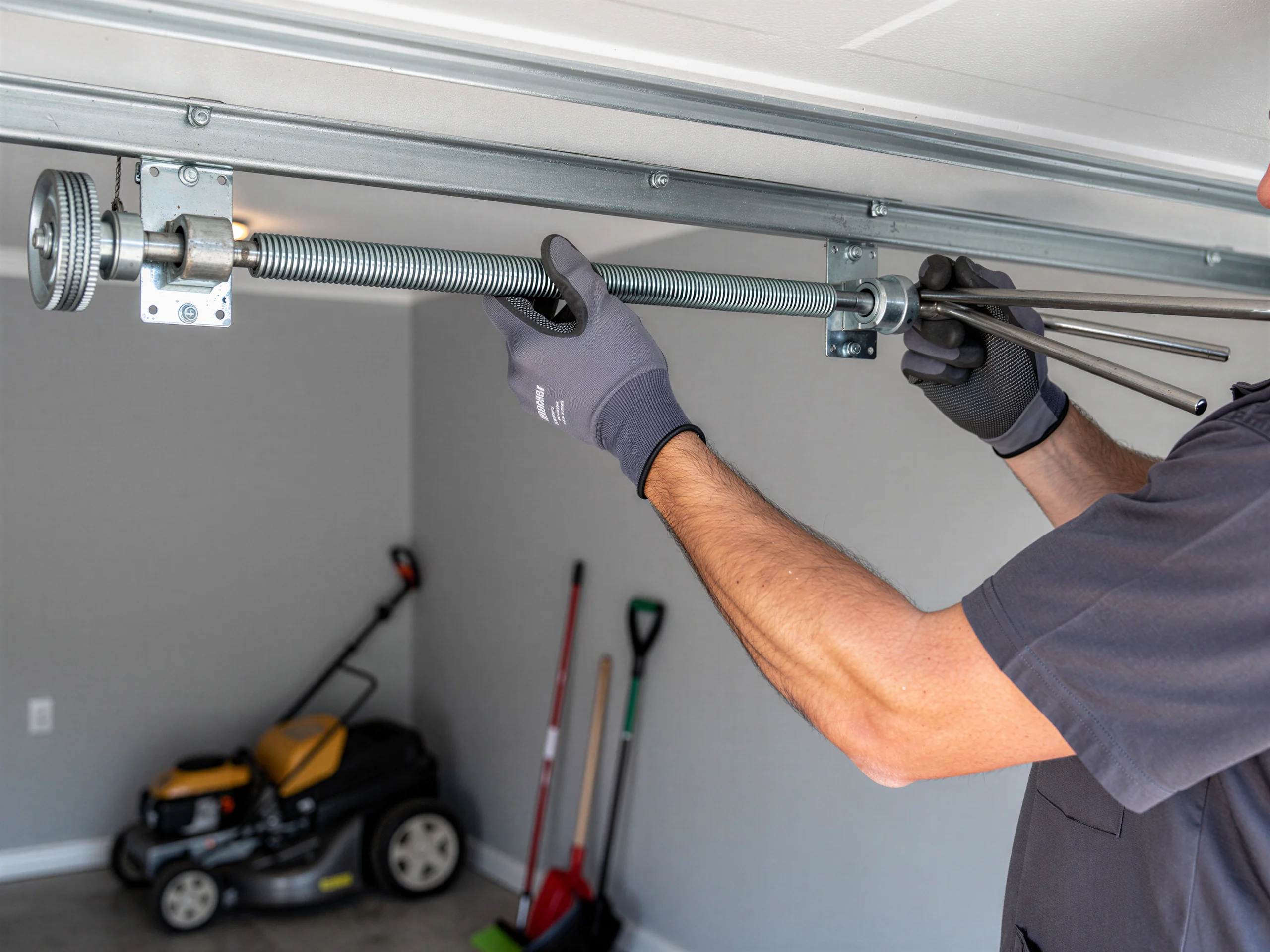
From there we check spring tension, inspect cables for fraying at the drum, tighten the track brackets, and lubricate the rollers and hinges. On torsion systems we check that the bottom brackets are seated and the cable drums aren't slipping.
We also test the opener's force settings and auto-reverse, since a door that reverses too late or not at all is a safety issue, not a convenience one. If everything checks out, that's the job - no upsell, no replacing parts that have years of life left in them.
If something's worn past the point of adjustment, like a roller that's cracked or a cable showing broken strands, we replace it on the spot if it's a part we're carrying. The whole point of a maintenance call is to extend the time before you need a repair call, not to generate one.
Symptoms
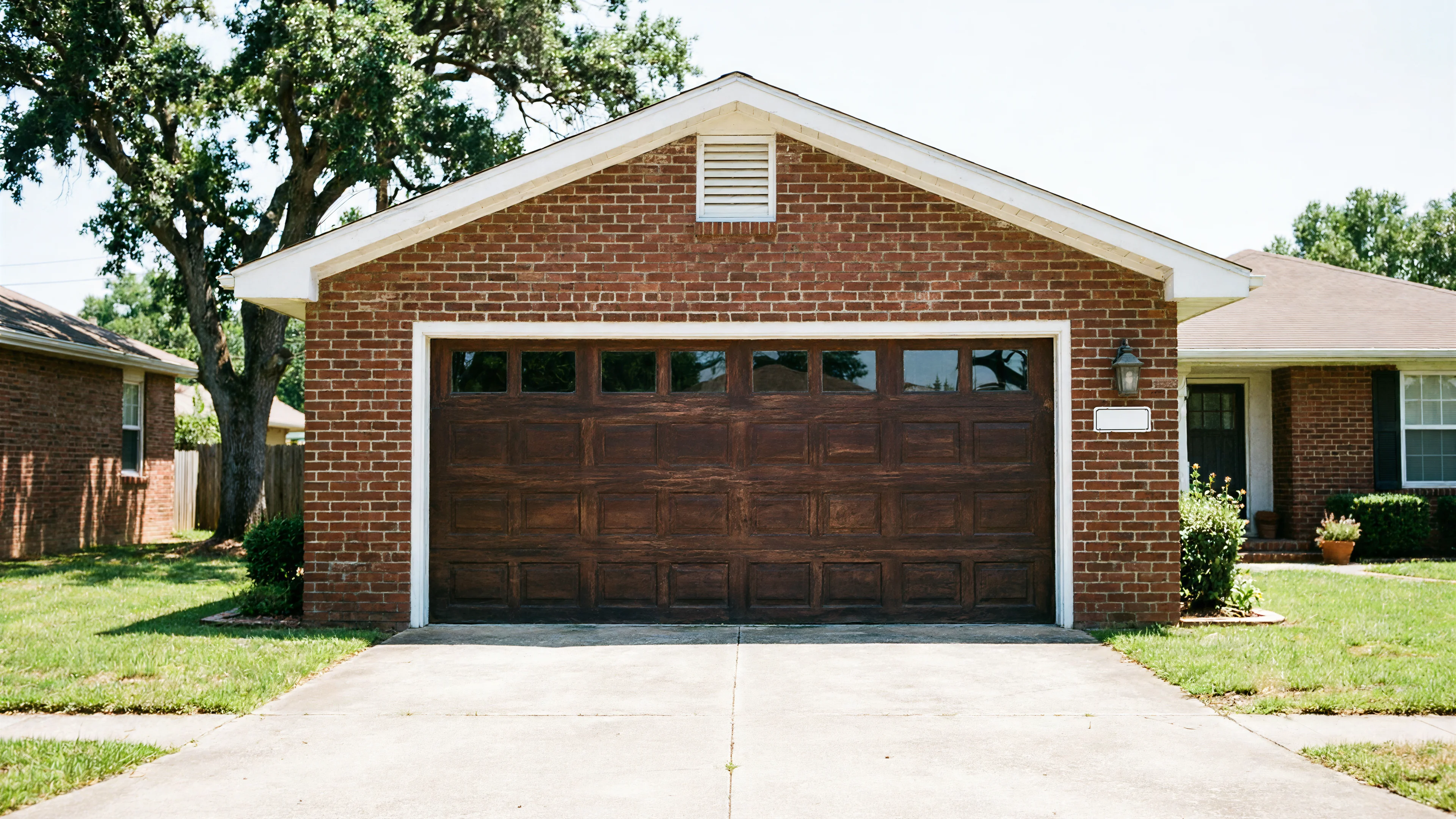
The most common complaint we hear on calls out here is a door that's gotten noisier over the last year or two - a rattle on the way up, a thunk partway through the cycle, or a grinding sound near the top of the track. Because most houses in Trophy Club were built around 2000, a lot of these doors are now 20-plus years old, which is close to the point where original rollers start cracking and the factory lubricant has long since dried out. It's rarely the opener failing outright; it's usually the moving hardware around it wearing down gradually enough that nobody noticed until the noise became obvious. Some owners also mention the door feeling heavier to lift manually, which usually points to spring tension drifting rather than anything wrong with the opener motor itself. None of these are emergencies, but left alone they tend to turn into one.
Local causes
The area sits in a moderate-heat climate band, and that steady heat cycling is hard on rubber seals, nylon rollers, and lubricant - grease that's fine in spring turns thin and runs off metal parts by August, leaving hardware to grind dry.
Combine that with a housing stock concentrated around the year 2000, and you get a specific pattern: original builder-grade rollers and openers that are now old enough to be at the end of their expected service life, all reaching that point around the same few years, since so much of the town went up in the same building window.
Higher household income here, median near $193,026 against roughly $107,916 across the broader service area, also means more two-car and heavier insulated doors, which put more sustained load on springs and openers than a single lightweight door would. None of that means the doors were built poorly - it means a lot of hardware is aging out at once.
Watch-outs
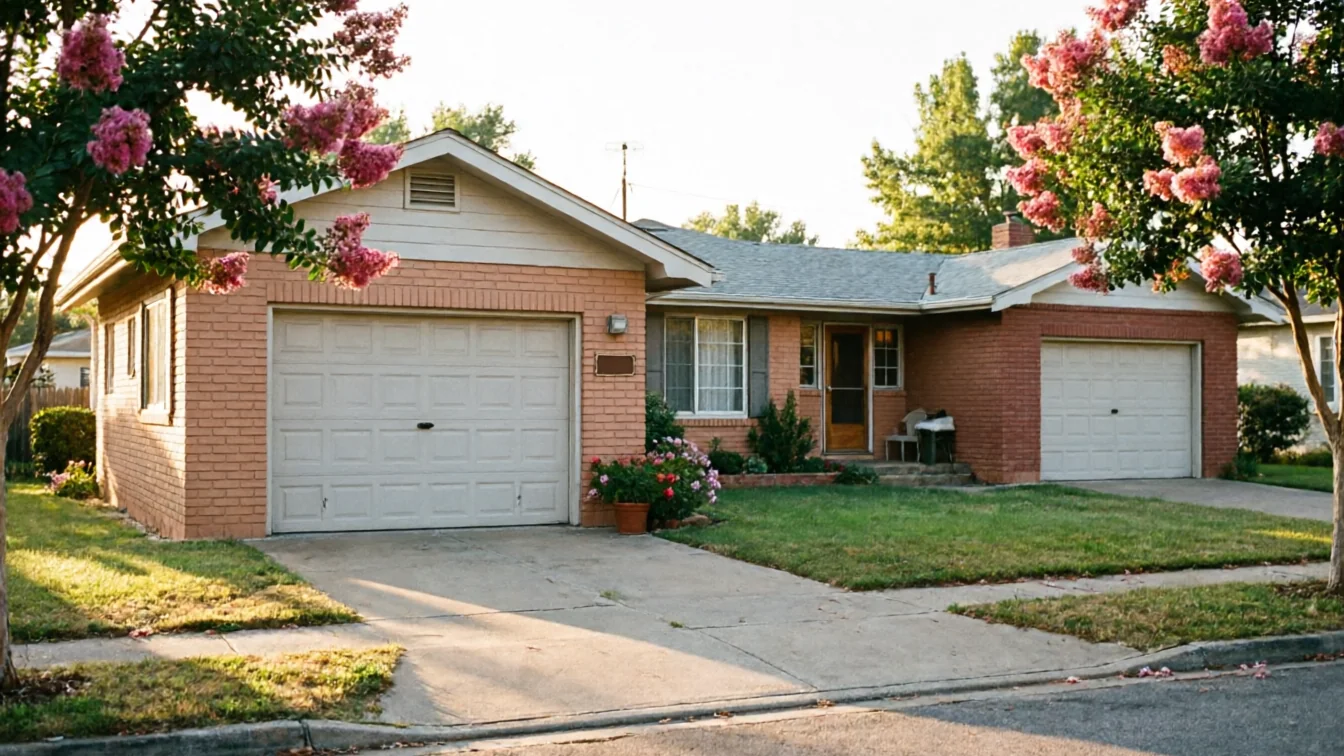
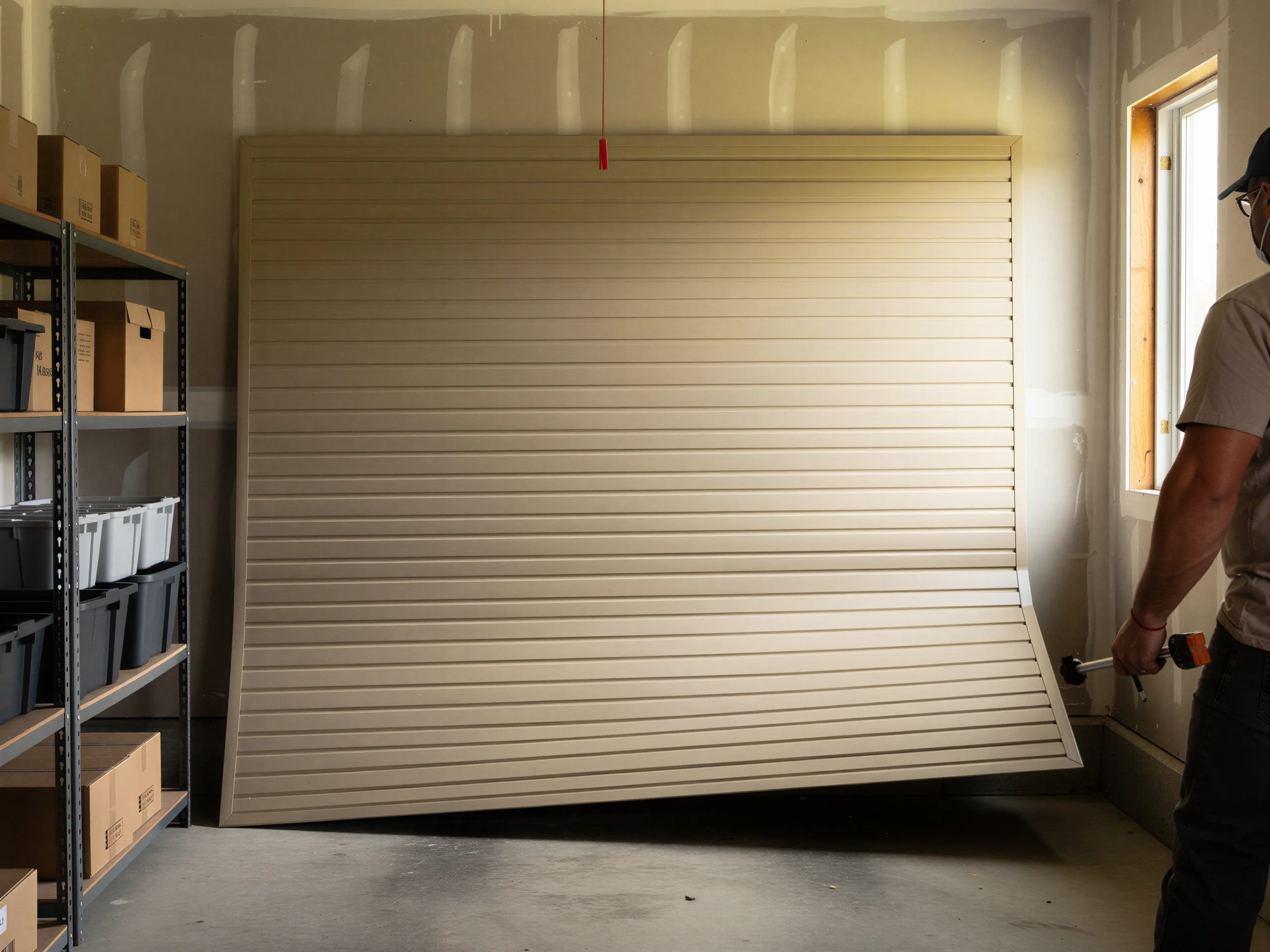
Most maintenance calls here are straightforward: lubricate, tighten, test, done. It goes sideways when the tune-up uncovers something that isn't a maintenance item - a spring that's visibly stretched or a cable with broken strands, both of which are repair work, not upkeep. We won't force a spring adjustment on hardware that's past safe tensioning; that's a replacement, and we'll say so rather than patch it. The other place it gets complicated is opener age: doors from the 2000 construction wave often still run their original opener, and some of those models are old enough that replacement parts are hard to source quickly. If that's the case, we'll tell you honestly whether it's worth repairing or whether the opener's old enough that replacement makes more sense long-term. We'd rather lose a repair than talk you into fixing something that's going to fail again in six months.
Questions
With this area's moderate heat cycling and houses mostly dating to around 2000, once a year is reasonable for most doors. If the opener or springs are already 20-plus years old, twice a year catches wear earlier, since original hardware from that building period is now reaching the end of its typical service life.
No. We work out of North Richland Hills and drive the roughly 10 miles out for every call here. There's no local depot, so maintenance visits are scheduled trips rather than walk-in service, but the door stays fully usable before and after the appointment.
Often, yes, if the noise is from dry lubricant or a worn roller, which is common in homes built around 2000 that are now old enough for original hardware to wear out. If the noise is coming from a stretched spring or damaged cable, that's a repair, and we'll tell you straight rather than mask it with grease.
Yes, maybe more than on an older one. Catching a cracked roller or loose bracket before it fails costs far less than an emergency call after the door jams. Since most doors in this part of town are around two decades old, they're at the age where small wear turns into a real repair if it's ignored.
Explore more
Ready when you are
North Richland Hills Garage Door Co repairs and installs garage doors, springs and openers in North Richland Hills, TX and the surrounding area.